Buyer Guide · Materials
Ceramic materials
and safety, explained.
When you sell ceramics, customers ask whether a piece is safe, sturdy, and easy to care for. This guide explains the material we work in, what food-safe and lead-free actually mean, and how to care for ceramic décor, so you can answer with confidence.
Published 12 July 2026 · Last reviewed 23 August 2026
The Material
Why stoneware.
We work primarily in ceramic stoneware: a clay body fired at high temperature until it becomes dense and hard. That density is the whole point. It resists chipping, takes daily handling, survives transit, and, for functional pieces, holds a food-safe glaze well.
Compared with soft earthenware or terracotta, which stays porous and knocks easily, stoneware is the more durable base for homeware that is meant to be used, not only displayed. The trade-off is weight: stoneware feels solid in the hand, which most décor buyers read as a quality cue.
Glazes & Finishes
Finished by hand.
The finish is where a piece gets its character. Ours are applied and worked by hand, so small variation across a batch is normal and part of the crafted look.
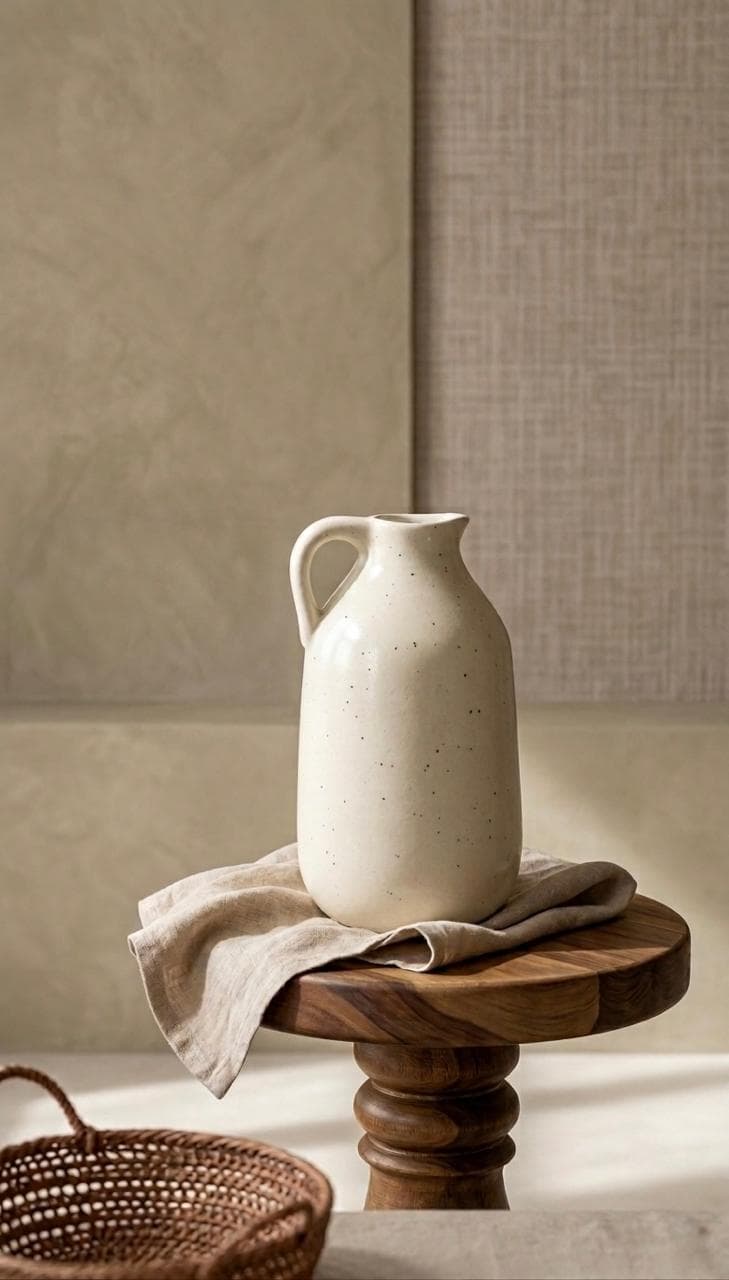
- Speckle: flecked, tactile, rustic
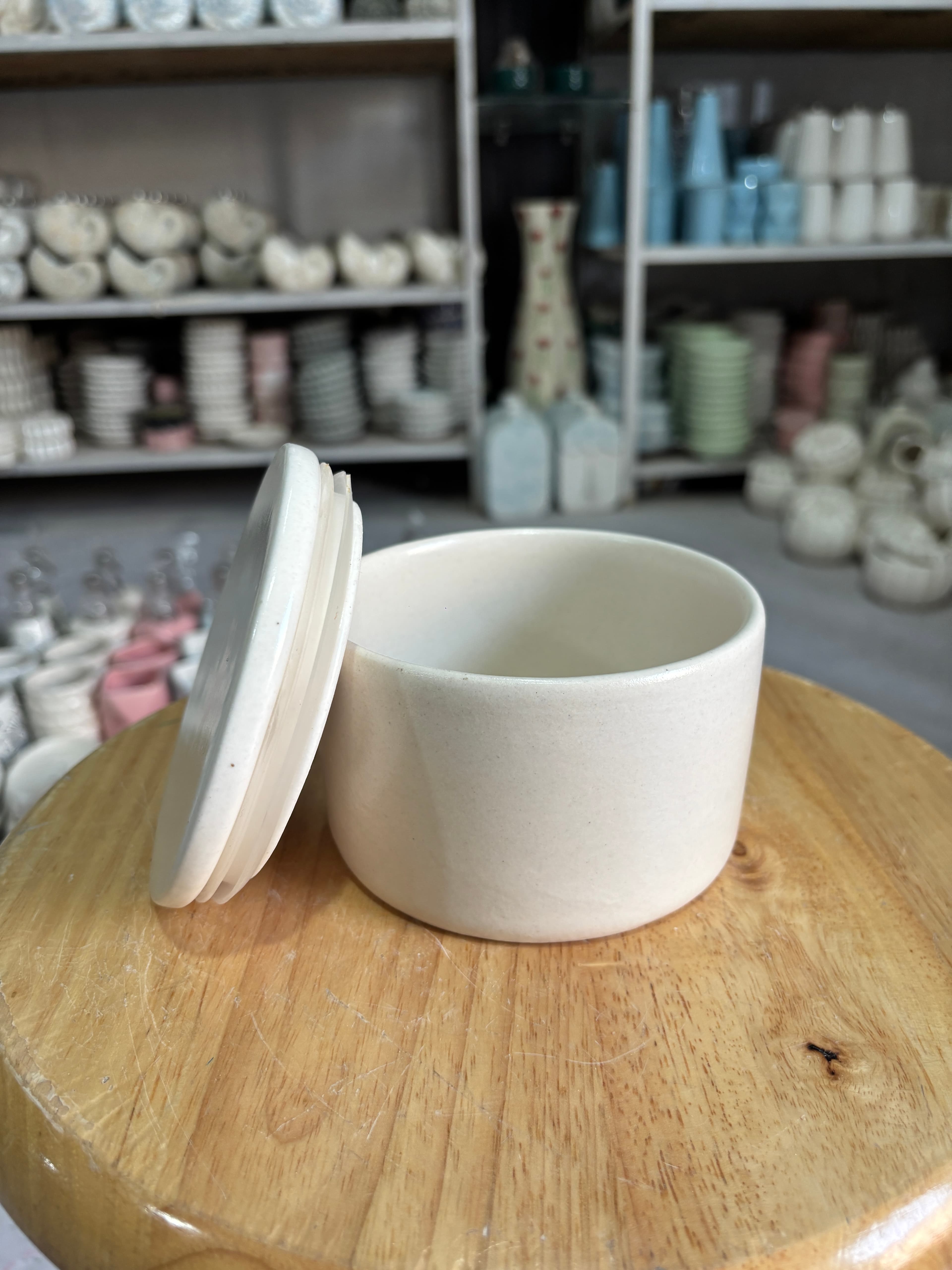
- Matte: soft, contemporary, low sheen
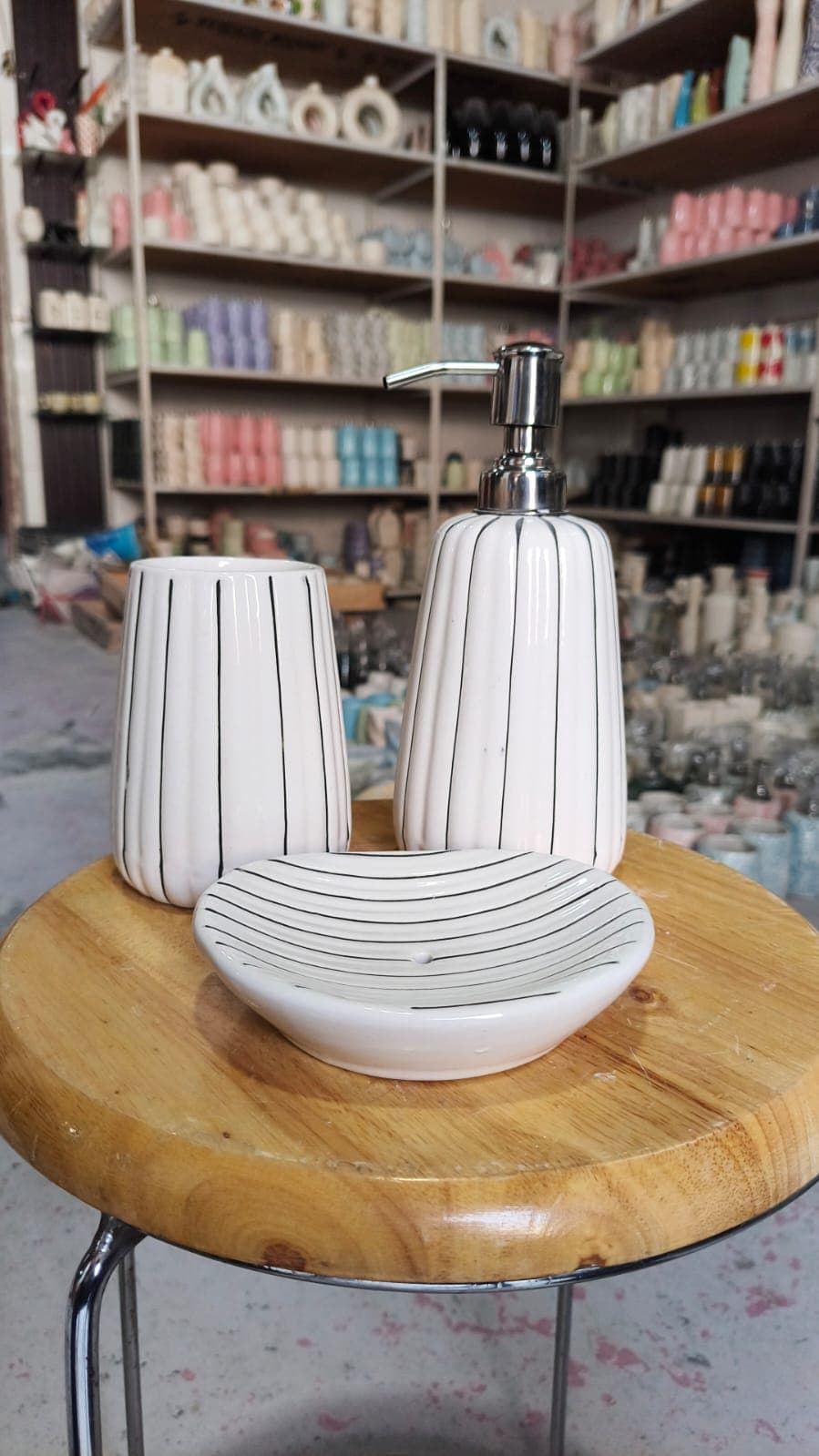
- Gloss: bright, easy to wipe clean
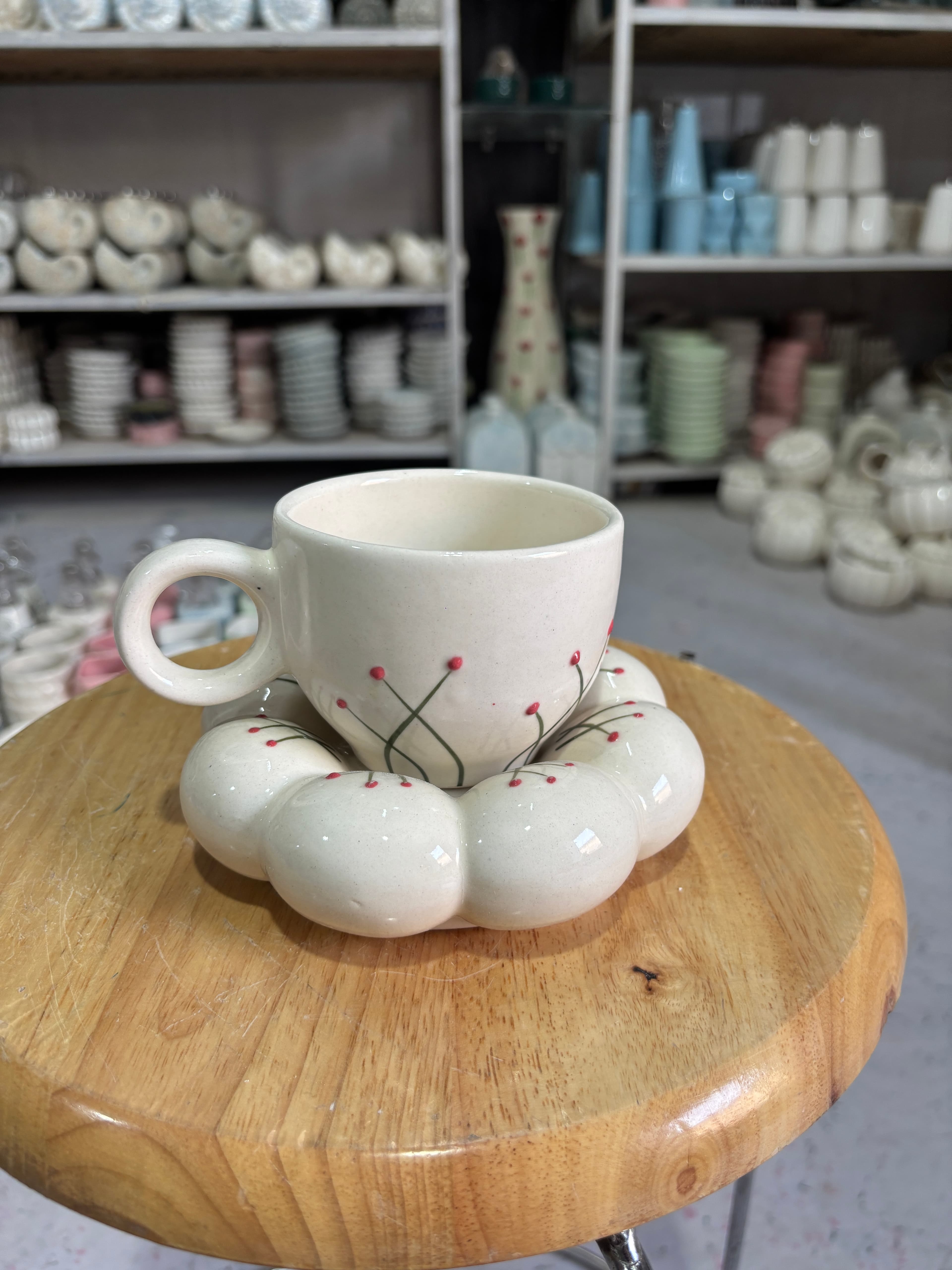
- Hand-painted: patterns and motifs on request
Safety, Plainly
Food-safe and lead-free.
Two terms come up on functional pieces. Food-safe means the glaze is suitable for contact with food and drink. Lead-free means the glaze does not use lead as a flux, so nothing harmful can leach into food.
Our functional pieces are food-safe, lead-free, and microwave- and dishwasher-safe. These are the facts worth putting on a shelf ticket, because they answer the questions a retail customer asks before buying.
Source The Material
Stoneware décor, made in Khurja.
We manufacture stoneware home décor in bulk and sell B2B direct. Browse the range or ask for a quote, samples included if you want to check the material first.
Finishes In The Range
How the glazes read on a piece.
Speckled, matte, and gloss finishes across our production, so the differences described above are easier to picture on a finished piece.
Common Questions
About materials & safety.
What is stoneware?
Stoneware is a dense, high-fired ceramic. It is fired hot enough that the body vitrifies, becoming hard and largely non-porous. That is what makes it durable for daily use and transit, compared with softer, more porous earthenware or terracotta.
What is the difference between stoneware and porcelain?
Both are high-fired and durable. Porcelain uses a finer, whiter clay fired even hotter for a translucent, delicate look, while stoneware is heavier, more rustic, and very hard-wearing. For décor and functional homeware that takes handling, stoneware is the practical choice.
How should ceramic décor be cleaned and cared for?
For most pieces, wipe with a soft damp cloth and mild detergent; avoid harsh abrasives that can scratch a glaze. Functional pieces that are marked microwave- and dishwasher-safe can go in both, though hand-washing extends the life of any hand-finished glaze. This is useful to pass on to your retail customers on a shelf ticket.
Will ceramic pieces survive shipping and daily retail handling?
High-fired stoneware is dense and chip-resistant, and orders are packed and cushioned for transit to keep breakage low. On the shelf, the same density is why the pieces take repeated handling without the surface wearing quickly.
Related: bathroom sets buying guide, or read about our ceramic manufacturing in Khurja. If you are buying from outside India, the importing guide sets out how the food-contact rules above are actually enforced at the border, including the US action levels and the EU declaration of compliance.
Get in touch
Ready to place an order?
We respond to all enquiries within 24h.